Home Generator Sizing in kW, From Portable to Whole House
What size generator do you need? Pick the circuits you want running during an outage for a generator size in kilowatts.
The results on this page come from public data and general rules of thumb, applied to what you entered. They can be wrong or out of date, and they may not fit your home. They are not professional advice, an inspection or an offer of service. Before you act on anything here, check it with a licensed pro or the agency named on the page. Any decision you make is your own, and we are not responsible for losses from relying on these results.
Data: typical running and starting wattages compiled for this tool from the U.S. DOE Energy Saver guide to estimating appliance energy use and from generator sizing charts by manufacturers · portable generator placement from CDC carbon monoxide guidance · Updated September 2026
How to work out what size generator you need
Running watts for each appliance
Each appliance you check has a typical running wattage, the power it draws once it is going. A refrigerator runs at about 700 watts, a furnace blower about 800 and a 3-ton central air conditioner about 3,500. We add those up to get the base load.
Starting watts and motor surge
Motors like a refrigerator compressor, a sump pump, a well pump or an air conditioner pull two to three times their running watts for a moment at start, by the figures used here. We add only the largest single surge on top of the running total, since the motors are unlikely to all start in the same second.
Portable and standby generator sizes
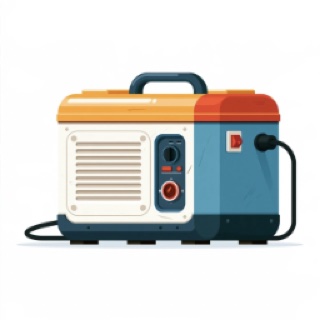
We add 20 percent headroom so the unit is not running flat out. The result falls into one of four groups, from portable (3.5 to 7.5 kW) and large portable (8 to 12 kW) to air-cooled standby (14 to about 26 kW) and larger liquid-cooled whole-home units. Big 240-volt loads like central air and a well pump are what push a house into standby territory.
What an electrician sets up for a generator
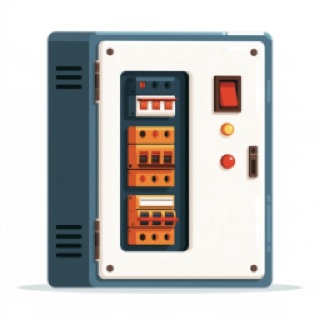
For a portable unit, the transfer-switch connection includes a power inlet on an outside wall, so the generator plugs in with one cord. A standby unit also needs a fuel line from the gas meter or a propane tank. Have your kilowatt number ready when you call.
Generator sizing questions
What size generator do I need to run a whole house?
It depends on what you want running. A 3-ton air conditioner, a 3/4 HP well pump, an electric range, a refrigerator, the furnace blower, lights and a TV come to about 23 kW here, near the top of the air-cooled standby range. An electrician can help you choose which circuits to keep on.
Can a portable generator run my central air conditioner?
Sometimes. A 2-ton unit can start on a large portable with a 240-volt outlet. At 3 tons the air conditioner alone comes to about 12 kW here, and at 4 tons about 17 kW, which is standby range.
Should I get a portable or a standby generator?
Portable units cover the basics for a few hours at a time and need you home to start them and refuel. Standby units start on their own within seconds, run on natural gas or propane, and carry the whole house or a chosen set of circuits. Long or frequent outages, a sump pump, a well or medical equipment are reasons to lean toward standby.
Can I plug a generator into a wall outlet?
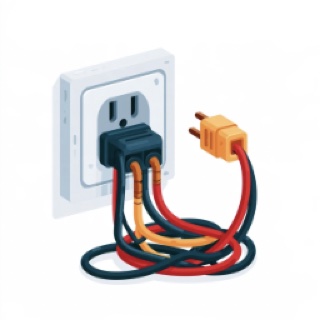
No. Plugging a generator into an outlet, called backfeeding, bypasses every protection in the panel and can send power onto the utility lines, where it can injure a line worker. A transfer switch or interlock installed by an electrician is the accepted connection, and it keeps the house off the utility lines while the generator runs.
How long will a generator run on a tank of fuel?
For a portable, the spec sheet lists how long it runs on a full tank at a given load, and a heavier load shortens it. A natural gas standby unit runs as long as the utility gas flows, so it does not need refueling during a long outage. A propane standby unit runs as long as its tank lasts.