When to Winterize Sprinklers: Blow-Out Date by First Frost
When should you winterize your sprinklers? The median first frost where you live sets the date to have the system blown out or drained by, with a reminder.
The results on this page come from public data and general rules of thumb, applied to what you entered. They can be wrong or out of date, and they may not fit your home. They are not professional advice, an inspection or an offer of service. Before you act on anything here, check it with a licensed pro or the agency named on the page. Any decision you make is your own, and we are not responsible for losses from relying on these results.
Data: median first frost from Daymet (NASA/ORNL 2015 to 2024) when a town is named · otherwise the frost band you pick, which a ZIP sets from its IECC climate zone with a zone-to-band table built for this tool · Updated September 2026
How the sprinkler blow-out date is set
Finding the median first frost date
The median first fall frost is the middle date of the first 32°F night across a run of years. When your town is named, the tool uses the Daymet median for 2015 to 2024. If not, enter a ZIP or pick the part of the fall when your first frost usually lands.
How far ahead of the frost to winterize
The target date is 10 days before the median frost, and 7 days before it is the latest to leave it. That lead allows for a frost that comes early, without shutting the water off while the lawn still needs it.
Why freezing water cracks sprinkler parts
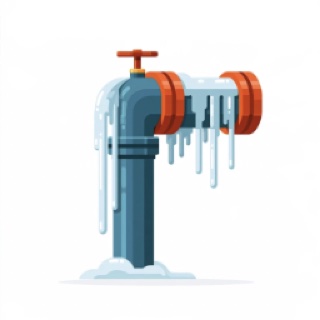
Water expands by about 9 percent as it freezes. Inside a pipe, valve or sprinkler head full of water, that pressure has nowhere to go, so the part splits.
Telling a blow-out system from a drain-valve system
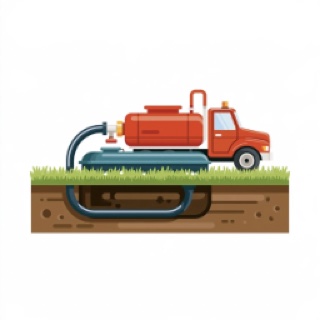
Systems are cleared one of two ways. A blow-out pushes the water out with compressed air. A drain-valve system lets water out at its low points, either on its own or when the valves are opened. If you are not sure which you have, pick manual drains above, and the irrigation contractor can tell you at the visit.
Sprinkler winterizing questions
When should I winterize my sprinkler system?
About 7 to 10 days before the median first frost where you live. With a first frost in early October, that is late September. Where frost comes in early September, it is late August, and where it waits until November, the date slides to the start of November. Pick your frost timing above to get your date.
What happens if I do not blow out my sprinklers?
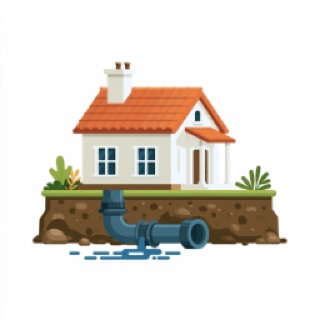
Parts that still hold water can crack in the first hard freeze. Damage to buried lines may not show until next spring, as wet spots or dead zones once the system runs.
Can I winterize my sprinklers myself?
A blow-out is a job to book with an irrigation contractor or plumber. It takes a compressor that can move enough air through every zone, set to a pressure matched to the pipe and heads, and too much pressure damages the system.
Do I need to winterize in a warm climate?
Where hard freezes are rare, a full blow-out is less common. The backflow preventer can still crack on a night below freezing, so it needs protecting before the first one. An irrigation contractor or plumber can set that up.
What is a backflow preventer?
A brass valve assembly, mounted above ground near where the irrigation line leaves the house, that keeps yard water from flowing back into the drinking water supply. Local plumbing rules generally call for one on an irrigation system.