Identify a Household Pest From Droppings, Bites or Damage
Not sure what pest you have? What you found, from droppings and bites to damage or the bug itself, points to which pest fits and what an inspection covers.
The results on this page come from public data and general rules of thumb, applied to what you entered. They can be wrong or out of date, and they may not fit your home. They are not professional advice, an inspection or an offer of service. Before you act on anything here, check it with a licensed pro or the agency named on the page. Any decision you make is your own, and we are not responsible for losses from relying on these results.
Data: university extension identification guides (UC IPM, Penn State Extension, University of Kentucky Entomology) and CDC bed bug and flea fact sheets · Updated November 2026
How to identify a pest from the clues you found
The most reliable kinds of pest evidence
To identify a pest, the bug itself is the best evidence, then droppings, then damage, then bites. The tool checks your clue against fourteen household pests, from mice and rats to bed bugs and termites.
Why the room and time of day help
The same droppings mean different things in a kitchen and in an attic. Adding the room, the time of day and any sounds helps separate look-alikes such as mice and young rats.
Strong match or possible match
A strong match means one pest fits your clues clearly better than the others. A possible match means two or more fit about as well. Look-alike pests are treated in different ways, so a possible match is one to have confirmed.
What happens at a pest inspection
A licensed inspector looks for where the pest lives, how it gets inside and how far it has spread, and checks for the damp spots or food that draw it. The treatment plan is built on what they find.
Pest identification questions
How do I tell mouse droppings from rat droppings?
Mouse droppings are about a quarter inch long with pointed ends. Rat droppings are closer to half an inch, with blunt ends. A young rat leaves droppings near mouse size, so where you found them helps tell the two apart. Fresh droppings are dark and soft, and old ones turn gray and crumbly, which shows an inspector how recent the activity is.
What bit me in my sleep?
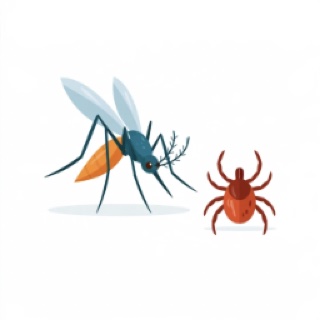
Bed bugs feed on skin left uncovered in bed, and their bites can show up in a row or a tight group. Flea bites show up low, around the ankles and lower legs. Bites on their own are hard to read, because mosquito and other insect bites can look the same, so look for a second sign such as small dark spots on the sheets.
Are those flying ants or termites?
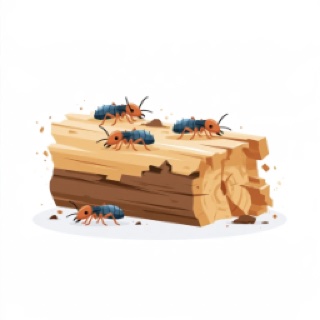
Winged termites, called swarmers, have straight antennae, a thick waist, and two pairs of wings the same length. Flying ants have bent antennae, a pinched waist, and front wings longer than the back ones. Piles of shed wings on a window sill are typical of termites.
What is the sawdust under my window frame?
It can be carpenter ants or drywood termites, and the pile tells them apart. Carpenter ants push out soft, fibrous shavings with bits of insect parts mixed in. Drywood termite droppings are hard pellets of one size, six-sided under a magnifier. Either one means insects are working inside the wood, so the frame needs an inspection.
Can a pest control company identify it from a photo?
A clear, close photo can help the company name the pest, so have one ready when you call. The treatment still waits on the visit, since it depends on things a photo cannot capture, such as a nest inside a wall.