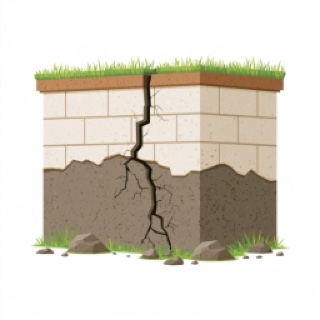
Foundation Cracks: Which Are Serious, by Type and Width
Which foundation cracks are serious? Pick the crack type, width, location and whether it is changing to know what a foundation inspector would check.
The results on this page come from public data and general rules of thumb, applied to what you entered. They can be wrong or out of date, and they may not fit your home. They are not professional advice, an inspection or an offer of service. Before you act on anything here, check it with a licensed pro or the agency named on the page. Any decision you make is your own, and we are not responsible for losses from relying on these results.
Data: the crack types, width bands and three levels are this tool's own plain-language scale, not a published standard. Soil: your own answer, or the USDA NRCS SSURGO shrink-swell class where a town is named · Updated November 2026
How to tell if foundation cracks are serious
What the direction of a crack tells an inspector
Inspectors sort cracks by direction first: vertical, diagonal, stair-step or horizontal. Each direction has its own likely causes, and horizontal cracks in a foundation wall get the closest look.
How crack width is measured here
The width choices run from hairline to a crack you can fit a finger into, with a credit card and a pencil as gauges in between. Wider cracks raise the level, and a crack that is new or growing goes to the top level whatever its width.
Water through the crack and clay soil
Two more answers can raise the level: water coming through the crack, and heavy clay soil that swells and shrinks with the seasons. If you do not know your soil, leave it on Not sure and it changes nothing.
Who to call about a foundation crack
A foundation repair company can take the first look and measure the cracks. A structural engineer gives an independent assessment and is the one to bring in when the cracks suggest the structure is moving.
Foundation crack questions
Is a horizontal crack in a foundation wall serious?
Inspectors take it seriously, and this checker puts every horizontal wall crack in its top level. A wall that bows inward or a crack that keeps widening adds to the concern. A structural engineer can tell you whether the wall is moving.
What does a stair-step crack in brick mean?
Brick and block crack along the mortar joints, which gives the stair shape. An inspector checks how wide the joints have opened and whether the bricks on each side have shifted out of line.
Are hairline cracks in a foundation normal?
They can be. Poured concrete shrinks as it cures and can leave hairline cracks. A hairline crack that later widens, lets water in or shows up along with sticking doors is a reason to call a foundation specialist.
How wide is too wide for a foundation crack?
There is no single cut-off for every wall, and width is read together with direction and change. In this checker, a pencil-width crack goes to the top level when its direction already suggests movement, and a crack you can fit a finger into always does. A foundation specialist measures the real width with a crack gauge.
Is sealing a foundation crack enough?
Sealing can stop water coming through. Whether that is enough depends on what caused the crack, which is what an inspection finds out.
What should I tell the inspector about a crack?
When you first saw it, whether it has grown, whether water comes through after rain, and whether nearby doors or windows have started to stick. Dated photos help them judge any change.