What Size Dumpster Do I Need for My Project?
What size roll-off dumpster do you need? The project and the rooms, roofing squares or pile size set which size holds it and where it can sit.
The results on this page come from public data and general rules of thumb, applied to what you entered. They can be wrong or out of date, and they may not fit your home. They are not professional advice, an inspection or an offer of service. Before you act on anything here, check it with a licensed pro or the agency named on the page. Any decision you make is your own, and we are not responsible for losses from relying on these results.
Data: EPA Volume-to-Weight Conversion Factors (2016) for the debris weight classes; box dimensions, weight allowances, shingle weights and the cubic yards per room are typical hauler figures and the tool’s own rules of thumb (2026) · Updated September 2026
How dumpster sizes and weight limits work
How cubic yards compare with pickup-truck loads
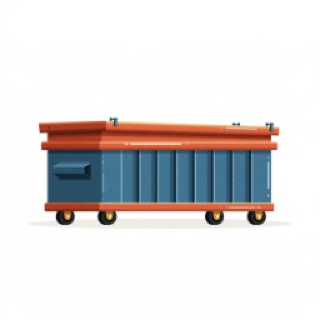
A roll-off dumpster is named for its volume. A 20 yard box holds 20 cubic yards, about six to eight pickup-truck loads. We turn rooms of contents, squares of roofing or a pile on the lawn into loose cubic yards, then pick the smallest size with room to spare.
Heavy debris hits the weight limit before the box is full
Every box carries a weight allowance. The calculator uses typical hauler figures of one to two tons for a 10 yard box up to four to five for a 40. Household junk and brush are light for their size. Shingles, tile, concrete, brick and dirt can pass the allowance with the box half empty, so heavy debris goes in a small heavy-debris box, filled only to a marked line.
Will the dumpster fit in your driveway?
A 20, 30 and 40 yard box are all about 22 feet long, or about two parked cars end to end. The bigger sizes just have taller walls. The delivery truck also needs a long, straight run-up and clear space overhead, so look for low branches and wires before you book.
What to tell the hauler when you book
Give the hauler the project, the rough volume and the heaviest material going in. Ask what weight allowance comes with the box, how long you can keep it and what they will not take. If the load is near the weight limit, or too much for one box or one truck, ask how a swap-out works.
Dumpster size questions
What size dumpster do I need for a whole-house cleanout?
The calculator counts about 3 cubic yards for each full room. By that measure, three to five full rooms fit a 20 yard box, six to eight need a 30 and nine or more a 40. Count only the rooms that are full of contents.
What size dumpster do I need for a roof tear-off?
A single-layer tear-off up to about 20 squares fits a 10 yard roofing box by volume, and 20 to 40 squares fits a 20 yard. Roofing is sized by squares (100 square feet each), layers and shingle type. Weight decides the rest, and architectural shingles weigh more per square than 3-tab, so a large or two-layer roof can need more than one haul. Tell the hauler the squares, the layers and the shingle type, and ask for the roofing allowance.
Can concrete or dirt go in a regular dumpster?
Not in a big one. Masonry and soil weigh about a ton per cubic yard, so a 20 yard box of concrete would be far over the weight limit. Ask the hauler for a heavy-debris box, and ask whether it takes concrete and dirt together or each in its own box.
Where can I put a dumpster?
A driveway is the first choice. If the box has to go on the street, check with your city first. A right-of-way permit may be required, and an unpermitted box can be ticketed or towed.
What can you not put in a dumpster?
Haulers refuse hazardous waste. That covers paint, solvents, oil, batteries, propane tanks, tires and refrigerant appliances, and some haulers also refuse mattresses or electronics. Ask when you book, because a refused item at pickup means a second trip.
What dumpster sizes are there?
Roll-off dumpsters come in four sizes: 10, 20, 30 and 40 yards. A 10 yard box is about 12 feet long, 8 feet wide and 3 1/2 feet tall. The 20, 30 and 40 yard boxes are all about 22 feet long and 8 feet wide, at about 4 1/2, 6 and 8 feet tall. A 10 yard box holds roughly 3 to 4 pickup loads of debris and a 40 yard box 12 to 16.